COI Compliance Checker
Compare a vendor's Certificate of Insurance against the requirements you actually need to enforce.
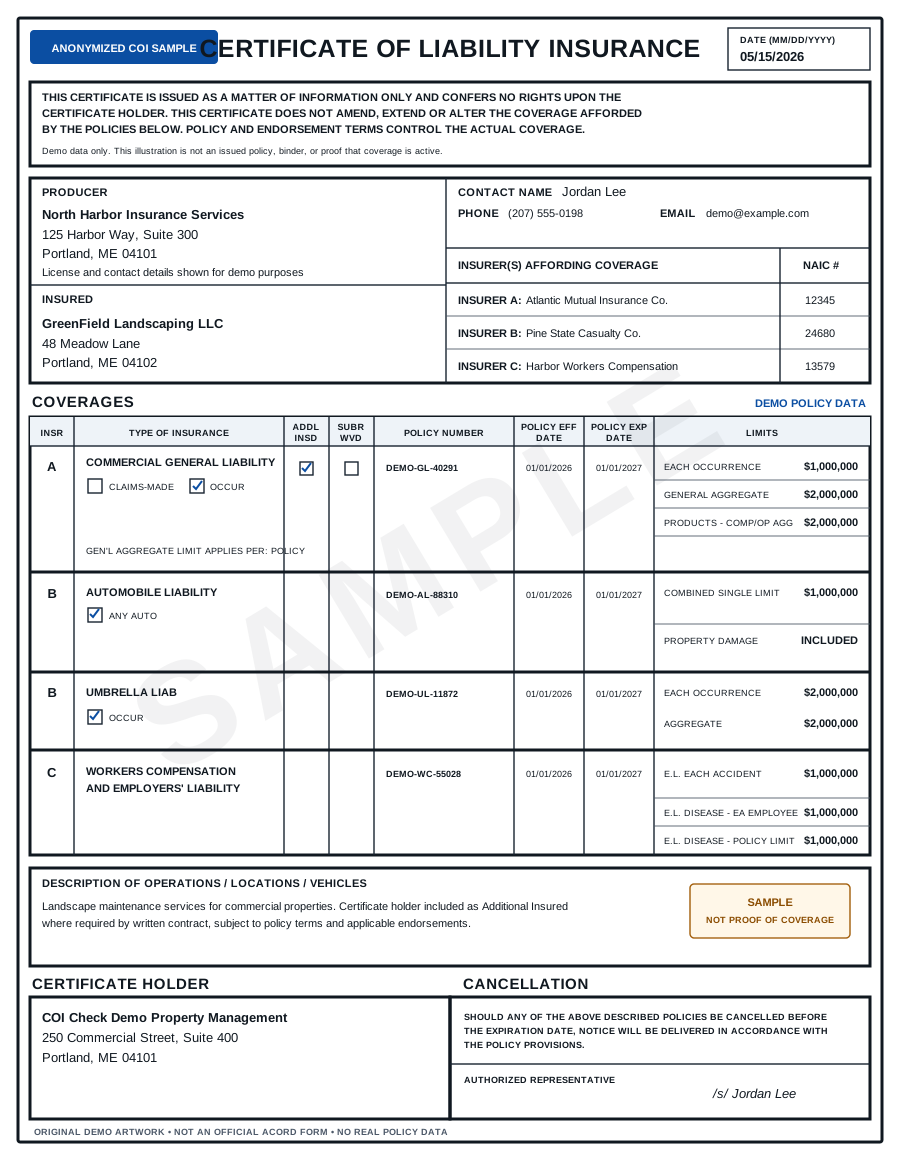
The compliance check should not stop at "we received a COI." It should answer whether the certificate appears to meet the required limits, coverage types, dates, and wording before the vendor starts work.
What a compliance check should compare
Use COI Check to structure a review around common requirement fields:
- General Liability per occurrence limit
- General Liability aggregate limit
- Commercial Auto limit
- Workers' Compensation requirement
- Umbrella or Excess Liability minimum
- Additional Insured wording or indication
- Waiver of Subrogation indication
- Certificate Holder name and address
- policy effective and expiration dates
- missing policy numbers, carriers, or incomplete fields
For trade-specific starting points, use the vendor insurance requirements hub.
Example compliance rules
A basic property-management requirement might look like this:
| Requirement | Example minimum |
|---|---|
| General Liability per occurrence | $1,000,000 |
| General Liability aggregate | $2,000,000 |
| Commercial Auto | $1,000,000 if vehicles are used |
| Workers' Compensation | Required when employees are used |
| Additional Insured | Required when contract requires it |
| Waiver of Subrogation | Required only if the contract says so |
| Minimum time before expiration | 30 days |
The final result should be deterministic: if a required limit is below the minimum, it fails; if a field is absent or unclear, it needs review.
Example compliance report
Status: NEEDS REVIEW
| Check | Result | Reason |
|---|---|---|
| General Liability | PASS | $1M per occurrence is shown. |
| Workers' Compensation | PASS | Workers' Compensation is listed. |
| Commercial Auto | FAIL | Auto Liability is not shown, but the vendor will drive on site. |
| Additional Insured | NEEDS REVIEW | Certificate references Additional Insured language, but the endorsement is not attached. |
| Expiration date | PASS | Policy expires more than 30 days from the review date. |
This format gives operations teams a practical next step instead of a vague "non-compliant" note.
Who uses this workflow
COI compliance checks are useful for:
- property managers approving service vendors,
- general contractors reviewing subcontractor documents,
- facility teams onboarding maintenance vendors,
- procurement teams checking supplier insurance,
- small businesses that need a repeatable COI process without buying a large compliance platform.
If you need a narrower workflow, see the Subcontractor COI Checker or COI Tracking for Property Managers.
What this does not replace
A COI is evidence of insurance information, not the policy itself. A document-level check does not:
- confirm coverage directly with a carrier,
- prove endorsements are attached,
- interpret contract language,
- replace broker, legal, or risk review,
- guarantee that coverage is active.
Use NEEDS REVIEW when the certificate appears incomplete, ambiguous, or too high-risk for a simple pass/fail decision.
FAQ
Can I use different requirements for different vendors?
Yes. Different trades can need different minimums. For example, roofing, security, snow removal, and HVAC vendors may require different coverage checks.
Should Additional Insured always be required?
No. It depends on the contract and risk profile. The checker can flag whether the certificate appears to include Additional Insured language, but endorsement-level protection may still need review.
Can the checker verify coverage with the carrier?
No. The standard workflow is document-level review. Carrier confirmation is still appropriate for high-risk work, suspicious documents, unclear policy language, or contract-critical coverage.
What happens after a failed check?
Send the vendor or broker a specific correction request. The COI request templates and COI deficiency guides provide copy-paste examples.
Disclaimer
COI Check provides document-level review of Certificates of Insurance. It does not provide legal advice, insurance advice, or a guarantee that coverage is active. For high-risk work, suspicious certificates, unclear endorsements, or coverage questions, confirm details with the issuing broker, carrier, legal counsel, or risk advisor.